Monday, February 8, 2010

Further Thoughts on the Robin Snow

So much for "folklore." Since I wrote the post last Wednesday about the lore of the "Robin Snow," we, here in Indiana have had 8-10" of snow, and temps have drifted below the 0'F
mark. As if to add insult to injury, the weatherman is
predicting another 6-8" of the white stuff beginning this evening into Tuesday morning.

I'm not giving up hope quite yet ... if the snow on th
e ground when the Robin sang his greeting
to me through the window was already there, this will be the second snow since his return.
I looked at my blog entry from last year at this time, and we had deep, drifted snow and such
cold temps that the drifts had frozen until they looked like glistening meringue.

The saddest irony of all is that Vancouver, the site of the Winter Olympics which begin this
Friday has temps in the 50s and no snow at all. I love the Winter Olympics and especially
the opening ceremonies ... last year in Turin the ceremonies were wonderful, and the 1994
games in Lillehammer, Norway remain a special favorite ... I'm really hoping that somehow,
in some special way, the Snow Queen will bless Vancouver with an abundance of snow for
their games as well.

In the meantime, those of us here in Indiana who
have the opportunity are enjoying the luxury of "hunkering down."


Snow Queen - Dulac

Snow Queen - Rie Cramer


Village - Luve


Wednesday, February 3, 2010

The Robin Snow - February 2, 2010

We've celebrated "Groundhog Day," Imbolc and Candlemas in the past few days - all dates which our ancient ancestors regarded in one way or another as the end of winter and the beginning of spring … I like the folklore of Imbolc which describes the first of February as the day of "Middle Earth," the time when seeds deep in the heart of the earth begin to stir and germinate; it is the very first harbinger of Spring … when the Goddess Brigid (who's feast is held on Imbolc) urges Winter to wake from his long dark sleep and enjoy the first sweet breezes of Spring.

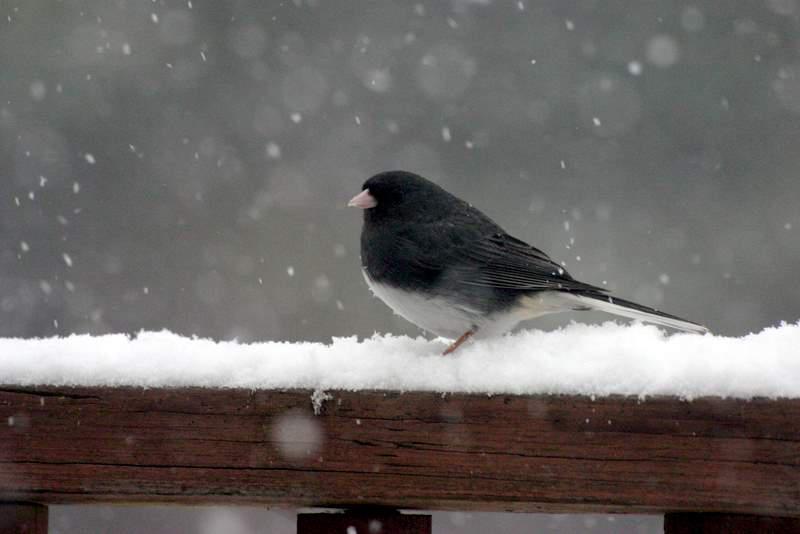
I was lamenting the fact this morning that I had no bonfire this year, not even a candle to light. I did find a very old box of candles in the antique store where I play shop keeper on the weekends, and the printed label indicated they were sanctified for the "Day of Purification," which is the Christian Candlemas. I didn't buy them, and this morning I was wishing that I had, imagining them burning softly, held by a pair of new candle holders from the Yule. As I mused on the candles, I was urged back to reality by the cheerful singing of a Robin, just outside my window. I watched him for just a moment, enjoying the song he offered up from his snow covered perch.
In my childhood, my grandmother always said that the snow that fell after the first Robin's song meant that two more snows would fall before s
pring. She called it the "Robin Snow." A sure sign of spring, and my first Robin appearing outside my window at the time of Imbolc seems to reinforce that bit of weather folklore. I'm not sure whether this Robin sang before the snowfall which has left the current covering on the ground, but I'm going to pretend that he was here before the snow.

This Mother Goose nursery rhyme will help me remember to keep feeders full for the birds until the last frosty snow is well past.

The north wind doth blow,
And we shall ha
ve snow,
And what will poor robin do then,
Poor thing ?

He'll sit
in a barn,
And keep hims
elf warm,
And hide his he
ad under his wing,
Poor thing!

From "The Real Mother Goose"


My Danish friend, who writes my favorite blog (A Polar Bear's Tale) shared this picture of tiny Dormice (http://www.dailymail.co.uk/news/article-484170/Dozing-dormice-set-alarm-spring.html) this morning, and I'm going to borrow it to share the second half of the Mother Goose rhyme about the "snow robin.'
copyright Connors

The North Wind doth blow and we shall have snow,
And what will the dormouse do then? Poor thing!
Roll'd up like a ball, in his nest snug & small,
He'll sleep till warm weather comes in. Poor thing!


The American Robin (Turdus migratorius) is a member of the thrush family, and is common in most regions of the United States during the summer months. Sometimes called the North American Robin, he is not the same species as the European Robin (Erithacus rubecula) which is much smaller and thought to be a member of the Flycatcher family.

North American Robin


European Robin

The European Robin is often called "The Christmas Robin" in the UK because so many of the colorful little birds migrate to the British Isles for the winter months. He is the subject of nursery rhymes and many myths, including a legend which explains that he got his red breast from a drop of Christ's blood which fell on him as he removed a thorn from Jesus' brow.

Wednesday, January 6, 2010

The Epiphany, Festival of the Three Kings & Carnaval

Today is the Epiphany or the Festival of the Three Kings. The day on which the Western Church and most Protestant Churches traditionally celebrate the arrival of the "Kings from the East" in Bethlehem to honor the new born Baby Jesus.

"Adoration of the Magi" Hieronymus Bosch


By the middle ages, veneration of the Wise Men had become popular throughout Europe and Epiphany was known as the the Feast the of the Three Kings … all of which coincided with Twelfth Night, and the end of the ancient season of Yuletide. This pagan holdover was a time of "misrule," and in many cultures the custom of wearing costumes and hiding one's identity with a mask became popular. Shakespeare's play Twelfth Night, employs the idea of things not being what they seem, or should be.

Twelfth Night festival was celebrated with the preparation of a "Kings Cake," and was also regarded as the beginning of the Carnival season. The custom of masquerade and costuming evolved into the custom of elaborate entertainments known as "masques," and later expanded into the extravagant social events which featured elegant balls and banquets for the very rich, and street celebrations and festivals for the lower social classes.

It is symbolic of the tension between the pagan past and the Christian West that the season of rowdy Carnaval begins on the Feast of Epiphany and ends with the beginning of Ash Wednesday and preparations for the Christian observance of Lent. Twelfth Night is still regarded as the initiation of Carnival Season in much of the world, and this evening, television news station WDSU in New Orleans reported on the first parade of the Mardi Gras season to "roll through the streets of the city!"


"Let The Good Times Roll!"

Saturday, January 2, 2010

TWELVETIDE - Following Yonder Star

"Old Christmas is past, twelve tide is the last
And we bid you adieu, great joy to the new"

The "Twelve Days of Christmas" are counted in different ways depending on the cultural traditions of the country in which the Yuletide season is celebrated. Celtic custom, counts sunset as the beginning of a new day and according to this method the Twelve Days of Christmas (Twelve Tide) are usually counted from the evening of December 25 until the morning of January 6th which is the Twelfth Day. Following this method of counting the days beginning with sundown, the evening of January 5 is Twelfth Night. In some church traditions, only the full days are counted so that January 5th is the Eleventh Day of Christmas, January 6th is Twelfth Day and the evening of January 6 is counted as Twelfth Night. In ancient cultures and in current church traditions, Christmas, or Yuletide is celebrated as a season rather than just a single day; in some areas of Europe, Yule celebrations begin in November and continue well into February! January 6th is celebrated as the Festival of the Three Kings, or Epiphany and is traditionally regarded as the day on which the "Kings from the East" arrived in Bethlehem to greet the newly born Baby Jesus. We know very little about the Kings - Mathew says only that they were "Kings from the East." Current scholars and historians have concluded that they were "wise men," or Magi - trained in many kinds of knowledge, including astronomy/astrology and no doubt lived and worked in Persia (present day Iran).


"We have seen his star in the East"

The account in the Gospel of Mathew does not say what amount of time passed between the sighting by the Magi of the Star of Bethlehem and their arrival to honor the newborn King, but it is clear that the distances involved presented an undertaking of great magnitude and it is assumed that the Magi traveled by caravan in order to reach their destination safely and as quickly as possible.
"and, lo, the star, which they saw in the east, went before them,
til it came and stood over where the young child was"

In the centuries since the gospel of Mathew was first set down and carried into Europe by the missionaries of the Christian church, artists in many countries have seen the "wise men" in many different ways and the interpretation of the story of the Wise Men has expanded as well - although Mathew does not tell us how many Magi traveled to Judea, tradition has set the number at three, probably a reflection of the three kinds of gifts presented to the Baby Jesus - "gold, Frankencense, and Myrrh." Costumes, physical characteristics and style of dress have all changed to reflect the vision and cultural orientation of the artist who painted them; they've traveled by camel, by horse and on elephants, but it matters not whether we see them on camels in the desert, horses in the country side of Renaissance Italy or the exquisitely crafted figures of a Neapolitan creche scene, the Wise Men are instantly recognized as an exotic and mysterious part of the Christmas story.


Byzantine Mosaic

"medieval Kings"


"Procession of the Kings" & Details - Benozzo Gozzili


"Procession of the Magi" - 18th Century Neapolitan Baroque Creche
Metropolitan Museum of Art, New York City
Gift of Mrs. Loretta Hines Howard


"Field and Fountain,
Moor and Mountain,
Following Yonder Star."

Friday, January 1, 2010

HAPPY NEW YEAR! January 1, 2010


Chiostri


SNOW DAYS - WINTER TIME


in my own yard - "boyz from the hood"


Tibetian Prayer Flags at the Top of The World


Winter Fantasy from Another Time


"Speed"


Wednesday, December 30, 2009

The Myth and Magic of Santa Claus

Imagine please, that we can hold up a mental image of that "right jolly old elf," and peel away the layers of commercialism and elaborately composed scenarios of daily life attributed to the modern characterization of Santa Claus and travel back in our time machine to the origins of the Elf himself. Once again we must look for the origin of our legendary symbol of Christmas Tide in the forests of northern Europe. It was in that wild and unconquerable region of the primal forest that the Teutonic peoples worshipped a wild Norse God who's name was Woden. (We can thank him for the name of our midweek day, "Wednesday.") Woden eventually became Odin and was revered as a god of magic, occult knowledge, poetry and war. He had the Shamanic ability to shape shift and could travel in other worlds. Eventually, he was depicted as an aged man, of great stature with flowing white hair and beard. Dressed in a cloak, he traveled across the skies on a magical white horse. At the Solstice, Odin lead his followers across the skies in a wild and fierce hunt … some later accounts say that German children set their shoes out on the night of Odin's hunt, filled with oats and hay for the horses which Odin and his followers rode.

Georg von Rosen


Oden's Hunt

Early in the Christian era, Nicholas, Bishop of Myra (part of modern day Turkey), became known as a miracle worker, and as a secret gift giver. Nicholas' reputation grew among the early Christian community and he is venerated as a special protector of children, who was believed to leave gold coins in the shoes of children left "out" in his honor. St. Nicholas was canonized as a saint, nearly by popular acclaim, long before the schism between the Western and Eastern branches of the Catholic tradition. His life is commemorated throughout Europe and much of the world on the date of his death, December 6. In the centuries following his death, it became the custom for children to receive small gifts on St. Nicholas Day. In Dutch and Flemish countries, St. Nicholas is known as "Sinterklaas," and is often pictured riding a beautiful white horse.


For many centuries, the spirits of Odin, St. Nicholas, Sinterklaas and finally Sante Clas existed in many guises and many forms. In the mysterious depth of the forests of the north, fir trees, holly and mistletoe sent forth their spells and enchantments, and Odin added elves, goats and a new bevy of magical, mostly benevolent supernatural beings whose dwelling places were generally hidden from the knowledge of human beings. By the 19th Century, even Odin had made a gentle transition of image and was appearing as an ever evolving version of the secret gift bringer of Wintertide.

Arthur Rackham

In-between Odin and St. Nicholas, there exists a vast assortment of magical, mystical beings who care for an entire menagerie of animals, some of which are enchanted, and some of which are real, flesh and blood beings … There were goats, and gnomes and elves … there were reindeer or caribou, who sometimes flew (I'm so sorry, it must be the influence of the poetc side of Odin), and various forms of transportation and an entire host of wonderful stories and legends to describe them. We can say that the Scandinavian concept of Santa riding a goat is probably a hold over from the stores of the Norse God Thor and his goat drawn chariot. In this engraving, the Julebukk (Yule Goat) is ridden by a very Odin-like figure who is wearing a wreath, and looking very much like the Holly King!


In the countries of Scandinavia, small gnomes or elf-like creatures called nisse live in the forest and country side year round; some of them specialize in caring very tenderly for farm and forest animals, and others live more closely with humans, being sometimes helpful and sometimes not.
Some of the gnomes bring presents to children on Christmas Eve, and look for a bowl of porridge in return!


In America, in the early 1800s, an illustration appeared with a "Dutch" version of "Sante Claus,"
and, as the century progressed, Santa Claus became more and more a "right jolly old elf,"
with the help of Clemete Clarke Moore and "A Vistit From St. Nicholas.


Thomas Nast


Arthur Rackham


Santa Claus, St. Nicholas and Kris Kringle are all names born in the 19th Century to describe a sometimes benevolent super-natural being who was widely known to those who lived in what is now Europe, Russia and parts of the Mediterranian region. In the course of time, he assumed the attributes of a wild, shamanic God of the northern regions and shared the northern forests with many kinds of elves, fairies and gnomes who were also sometimes benevolent and sometimes not. His legend was so prevalent, his identity and benevolence so famous that his reputation blended eventually with that of an early Christian Bishop who became St. Nicholas of Myra. We cannot know how long the belief in beings other than "human" has persisted among people, but we do know that writers and thinkers who have studied the nature of reality and the ways in which human beings have learned to understand it, do accept that in the beginning of human consciousness we perceived ourselves as being "in nature and a part of it." We could see and understand elements of our environment which are no long available to our sense of perception. It is nearly certain that our strongly held convictions about the existence of supernatural beings springs from this lost ability to see all of nature. It is quite likely a kind of "race memory" of a pantheon of gods described since the beginning of language, gives rise to many truths and the many ways of telling about the inhabitants of this planet we're living on. At the end of 2009, with Christmas just past, I must think back to Christmas of 2008, and the bright, sparkling Christmas morning which gave me the inspiration to write the first essay for this blog. The flight of thousands of Canada Geese, rolling over the southern horizon on their way north so caught my heart and my imagination that I was moved to give deeper thought to the meaning of life on the planet as we know it. I'm at a transitional age in both my life and the history of this country - things familiar to me in my childhood, and which had been commonplace to my grandparents are gone now … the land which supported so many, so well, and for so long is disappearing and an entire way of life is gone … not to be reclaimed I fear. And it is not necessarily for the better. "Progress" has not always meant improvement in the day to day lives of those who inhabit the earth, and incredible as it seems, there are those who believe that only the future holds promise or is worth giving thought or time to. … The flight of the Christmas Geese has lead me on a path of rediscovery this past year … and the adventure included the privilege of meeting a family of Canadas and watching as they raised their small brood. So, it was surely not an accident when, as I was pondering the origins and existence of Santa Claus, I found this post card …. it is most surely a message from the aether, Santa Claus and the geese!

"There are those who believe that Santa Claus is real.
But he isn't.
He's Magick!


Saturday, December 26, 2009

CHRISTMASTIDE

"For centuries men have kept an appointment with Christmas. Christmas means fellowship, feasting, giving and receiving, a time of good cheer, home." ~W.J. Ronald Tucker


ChristmasTide, MidWinter, Solstice, Yuletide, Twelve Tide - all the names given to various winter feasts, at different times in history. The early Celts believed that winter began with Samhain, or the end of summer. Samhain was a harvest feast but it is likely that winterfests began to mingle with the harvest festivals as the days passed and it became clear that daylight was growing shorter and the wind colder. The perception was that the nature of time itself changed when summer passed. Not only was "time" not behaving properly it was also believed that the veil or space between the worlds was much thinner beginning with the end of summer and there were great possibilities for magic to be worked. But possibilities for misfortune to befall were also much greater due to the ease with which beings moved from time to time and world to world to world. Nearly all cultures believed in small beings, such as elves, fairies, trolls and gnomes, who lived underground, underneath the tree roots or in the deep dark woods of Europe.


In the vast dark forests of the north, where the sharp cold winds came early,the pre-christian Germanic tribes observed the season of Yule leading up to Solstice and Yuletide probably continued well past the time we now consider "Christamas Day."As the hours of darkness increased, the need for fires increased as well, and the abundant bounty of forest firs, holly and mistletoe were brought inside to drape the halls as well, in the belief that their "evergreen" properties of eternal life would encourage the return of the sun to its proper place in the skies.
Medieval Winter celebrations began in the early part of the season, and soon grew to include Twelve Tide, or the Twelve Days of Christmas, up through the time time of Epiphany, or the coming of the Magi … the eastern Calendar moved the Feast of Christmas to the 7 of January, and the season was extended again. In many areas of Europe, Christmas markets sprang up with the blessing of the Church and Carnaval lent its African and Asian traditions and games to the atmosphere of festival and celebration. The "Lord of Misrule" added his antics to the sense that the natural order of things was suspended through out the winter festive season … in the later yearsoif the 19th century puppet shows and mummers parades became popular as well … Wassailing and Caroling became a part of the Yuletide festivies. It was the custom of the "Lord of the Manor" to invite all his serfs and their families into the great hall for feasting, merry-making, and one would imagine, just to stay warm.

"This is Yuletide! Bring the holly boughs, Deck the old mansion with its berries red; Bring in the mistletoe, that lover's vows Be sweetly sealed the while it hangs o'erhead. Pile on the logs, fresh gathered from the wood, And let the firelight dance upon the walls, The while we tell the stories of the good, The brave, the noble, that the past recalls."